
Don’t scale in the dark. Benchmark your Data & AI maturity against DAMA standards and industry peers.

me

Omni-Channel Retail Data & AI Solutions

Connect Your Retail Channels Into One Unified Engine

Eliminate inventory blind spots, reduce split shipments, and unlock margin growth by connecting your physical stores, digital shelves, and fulfillment networks into a single data-driven operation.

For US retailers ready to compete.

Connect Your Retail Channels Into One Unified Engine

The Operational Challenges Holding You Back

If you are managing omni-channel retail operations across Shopify, retail locations, and marketplaces, you are likely facing these persistent bottlenecks that erode margins and limit growth.

Disconnected Inventory Ledgers

Store POS and ecommerce platforms operate in silos, causing overselling online while dead stock sits idle in backrooms.

The Split-Shipment Penalty

Multi-item orders are frequently fulfilled from different locations, driving up packaging costs and eroding shipping margins.

Fragmented Customer Profiles

High-value in-store shoppers are treated like strangers online, leading to generalized marketing and wasted ad spend.

Manual Reconciliation Hours

Finance and operations teams spend hours every week manually balancing spreadsheets to understand cross-channel performance.

Inflexible Return Policies

Disconnected systems make buy-online-return-in-store (BORIS) workflows complex and frustrating for both staff and customers.

Rising Acquisition Costs

Without unified data to build targeted retention campaigns, you rely too heavily on expensive paid social ads to drive revenue.

The Cost of Doing Nothing

Disconnected data isn’t just an operational inconvenience—it’s a direct drain on your profitability. Without omni-channel retail data analytics and AI solutions, here’s what the status quo is costing retailers every year.

69%

Customers who abandon and buy from competitors

When customers encounter out-of-stock items, 69% immediately abandon their cart and shop with a competitor. Each stockout is a direct gift to your rivals.1

5-10x

Higher cost to acquire vs. retain customers

Fragmented customer data prevents personalized retention campaigns. You’re forced to spend 5-10x more acquiring new customers than retaining existing ones.2

43%

Customers who switch brands permanently

Repeated stockouts and poor fulfillment experiences don’t just lose today’s sale—43% of customers switch to competing brands permanently, eroding your market position.3
  1. Customer Abandonment Rate: Opensend. “29 Inventory Stock-out Rate Statistics for eCommerce Stores.” December 2025. https://www.opensend.com/post/inventory-stock-out-rate-statistics
  2. Customer Acquisition vs. Retention Cost Ratio: Optimove. “Customer Acquisition vs. Retention Costs.” https://www.optimove.com/resources/learning-center/customer-acquisition-vs-retention-costs
  3. Brand Switching After Stockouts: Opensend. “29 Inventory Stock-out Rate Statistics for eCommerce Stores.” December 2025. https://www.opensend.com/post/inventory-stock-out-rate-statistics

Recover the Margin Hiding in Your Retail Operations

A free playbook with 5 practical plays to stop margin leakage across demand, inventory, returns, and fulfilment—no big transformation required.
No spam. Unsubscribe anytime.

The Omni-Channel Margin Playbook

12-page PDF · 10-min read

The 5 plays inside

How Data Pilot Solves It

We translate your operational challenges into a practical data and AI strategy. Here are the core pillars we deploy for omni-channel retail teams.

Inventory That Syncs

We construct a real-time inventory backbone connecting POS, ecommerce, and warehouse systems. Stock levels update instantly across channels, eliminating artificial scarcity and overselling.

Orders That Route Smart (DOM)

We implement intelligent orchestration engines that evaluate incoming orders instantly against your entire fulfillment network. Orders are automatically routed based on proximity, shipping rates, and available store labor.

Customers You Actually Know

We construct a unified customer profile connecting offline and online interactions. By resolving identities across touchpoints, you can segment audiences based on predictive lifetime value and channel affinity.

Margins You Can See

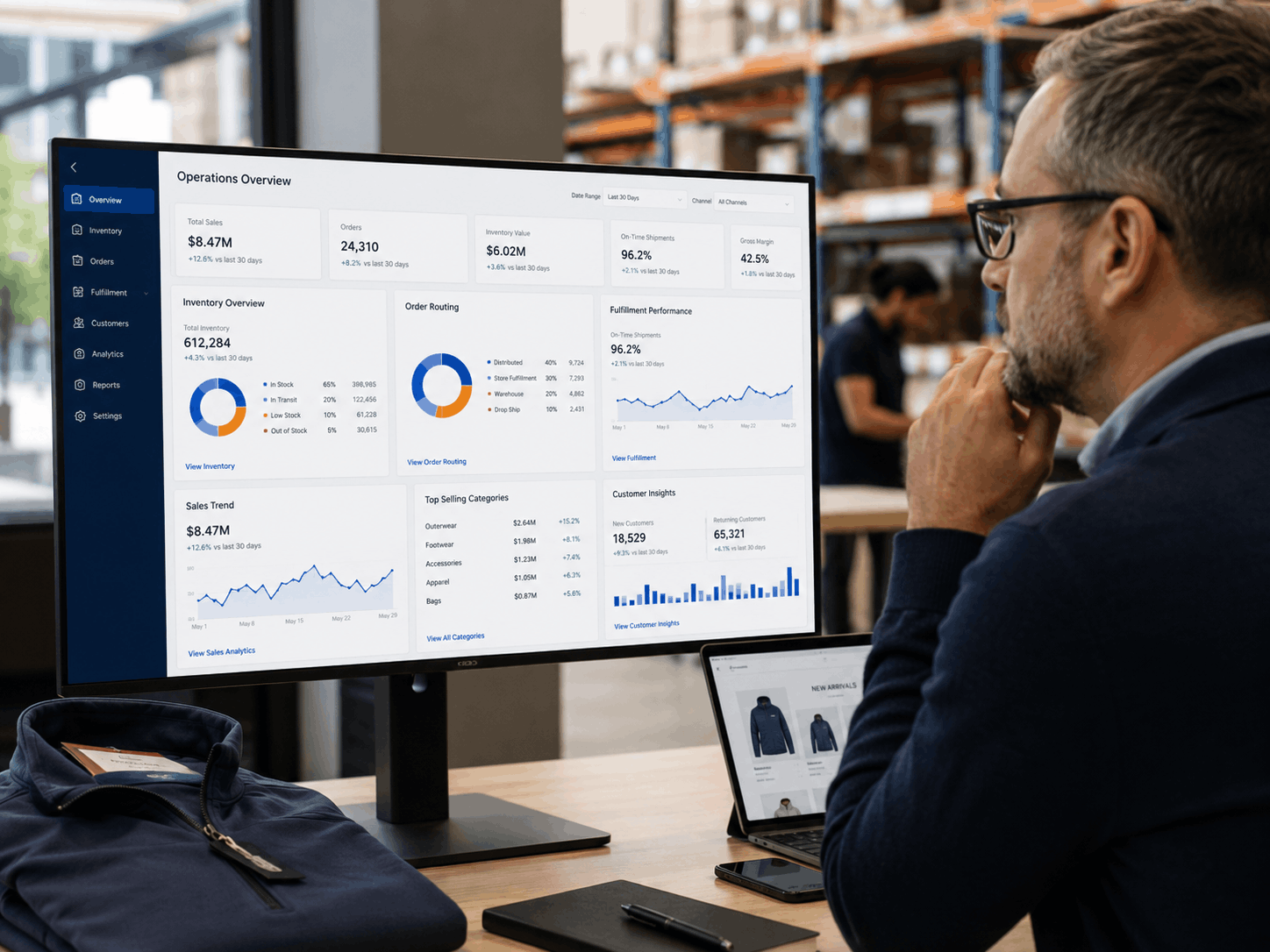
We replace scattered reports with unified dashboards that give your leadership team real-time visibility into true net margins by product line and sales channel, factoring in shipping and fulfillment expenses.

High-Value Use Cases

Real-world examples of how these pillars drive business value across omni-channel retail operations.

Real-Time Stock Visibility

Business Problem:

Inventory data is siloed between stores and online channels, leading to overselling and customer cancellations.

Data/AI Solution:

API-driven inventory sync that updates all channels instantly when stock changes.

Projected Business Value:

Increased sell-through rate and reduced customer frustration from cancellations.

Typical Tech Stack:

Shopify, WooCommerce, Stitch, Fivetran, BigQuery

Buy-Online-Pickup-In-Store (BOPIS)

Business Problem:

Manual BOPIS fulfillment creates delays and errors, reducing adoption.

Data/AI Solution:

Automated inventory reservation and store fulfillment workflows triggered by online orders.

Projected Business Value:

Higher BOPIS adoption, faster fulfillment, and improved customer experience.

Typical Tech Stack:

Shopify, Odoo, Make/Zapier, Twilio

Safety Stock Optimization

Business Problem:

Manual safety stock calculations lead to overstock in some locations and stockouts in others.

Data/AI Solution:

Predictive analytics that recommends optimal safety stock levels by location based on demand patterns.

Projected Business Value:

15-25% improvement in inventory turnover and reduced carrying costs.

Typical Tech Stack:

Shopify, NetSuite, Looker, Python/scikit-learn

Intelligent Order Routing

Business Problem:

Orders default to primary warehouses, causing split shipments and high fulfillment costs.

Data/AI Solution:

ML-powered routing that selects the optimal fulfillment location based on inventory, distance, and cost.

Projected Business Value:

12%+ reduction in fulfillment costs and faster delivery times.

Typical Tech Stack:

Shopify, 3PL APIs, AWS Lambda, TensorFlow

Dynamic Pricing Optimization

Business Problem:

Pricing is static across channels, missing opportunities to optimize margins by location and demand.

Data/AI Solution:

Real-time pricing engine that adjusts prices by location, channel, and inventory levels.

Projected Business Value:

5-10% margin improvement through optimized pricing.

Typical Tech Stack:

Shopify, Klaviyo, Tableau, Python pricing algorithms

Customer Lifetime Value Segmentation

Business Problem:

Marketing campaigns treat all customers the same, wasting budget on low-value segments.

Data/AI Solution:

Unified customer profiles with predictive LTV scoring to segment audiences for targeted campaigns.

Projected Business Value:

25-40% improvement in marketing ROAS and higher customer retention.

Typical Tech Stack:

Shopify, Klaviyo, Segment, Looker, Python/XGBoost

Churn Prediction & Prevention

Business Problem:

High-value customers churn without warning, and retention efforts are reactive.

Data/AI Solution:

Predictive models identify at-risk customers before churn, triggering automated retention campaigns.

Projected Business Value:

20%+ improvement in customer retention and reduced acquisition costs.

Typical Tech Stack:

Shopify, Segment, Looker, Python/scikit-learn

Cross-Channel Attribution

Business Problem:

Marketing teams can’t see which channels drive conversions, leading to misallocated budgets.

Data/AI Solution:

Unified data model that tracks customer journeys across all touchpoints to attribute revenue accurately.

Projected Business Value:

Better budget allocation and 15-30% improvement in marketing efficiency.

Typical Tech Stack:

Shopify, Google Analytics 4, Looker, Python

Markdown Optimization

Business Problem:

Manual markdown decisions lead to either excessive discounting or slow inventory movement.

Data/AI Solution:

Predictive markdown engine that recommends optimal discount levels by product and location.

Projected Business Value:

10-15% improvement in margin while maintaining healthy inventory turnover.

Typical Tech Stack:

Shopify, Tableau, Python optimization algorithms

Demand Forecasting by Location

Business Problem:

Centralized forecasting misses local demand patterns, leading to stockouts and overstock.

Data/AI Solution:

Location-specific demand forecasting that factors in local trends, seasonality, and events.

Projected Business Value:

20-30% improvement in forecast accuracy and reduced inventory waste.

Typical Tech Stack:

Shopify, NetSuite, Looker, Prophet/ARIMA models

Store Associate Empowerment

Business Problem:

Store associates lack real-time inventory visibility, missing sales opportunities and customer satisfaction.

Data/AI Solution:

Mobile app that gives associates real-time access to inventory, customer history, and recommendations.

Projected Business Value:

Increased average order value, improved customer experience, and higher employee engagement.

Typical Tech Stack:

Shopify, Segment, Looker, TensorFlow/Collaborative Filtering

Supplier & Fulfillment Optimization

Business Problem:

Supplier performance varies widely, and fulfillment partners aren’t optimized for omni-channel demands.

Data/AI Solution:

Unified dashboard tracking supplier performance and fulfillment metrics to optimize partnerships.

Projected Business Value:

Reduced lead times, improved on-time delivery, and better supplier relationships.

Typical Tech Stack:

Shopify, 3PL APIs, Tableau, AWS

Proven Results

We measure our success by the operational improvements and revenue growth we deliver. Here’s how we’ve helped teams like yours.

Fashion Retail Brand: From Spreadsheets to Omnichannel Intelligence

Fashion Retail Brand: From Spreadsheets to Omnichannel Intelligence

Challenge: Manual data aggregation from Shopify, Meta, and POS systems into spreadsheets caused critical reporting delays and data inaccuracies. A single team member was manually transcribing sales, engagement, and footfall data into Google Sheets.

Solution: Built a custom AWS data warehouse with automated ETL pipelines feeding real-time, interactive Tableau dashboards. Consolidated omnichannel data from online (Shopify, Meta, Google Ads) and offline (POS/Odoo) systems.

Key Outcomes:

  • Eliminated manual reporting bottlenecks and freed up team capacity
  • Consolidated omnichannel visibility enabling immediate inventory optimization
  • Enabled real-time marketing pivot decisions based on accurate performance data
  • Improved forecast accuracy and reduced inventory carrying costs

How to Get Started

Tell us where you want to start. Pick an entry point and book a free strategy session in under a minute.
Step 1 of 3 · Recommended start

Diagnostic

Get clarity on your current data architecture and a prioritized roadmap before committing to a build.
What you get
An assessment of your data landscape, identified quick wins, and a 90-day roadmap for unifying inventory and customer data.

You’re booking: Diagnostic

Reserve your session

No spam. No obligation.
Step 2 of 3

Inventory Sync

A reliable, real-time pipeline for teams feeling immediate pain from overselling or manual stock reconciliation.
What you get
A real-time inventory sync pipeline connecting your POS, ecommerce, and warehouse systems with automated reconciliation.

You’re booking: Inventory Sync

Reserve your session

No spam. No obligation.

Step 3 of 3

Customer Data

For growth-focused retailers ready to merge POS and ecommerce data to improve marketing ROI and retention.
What you get
Unified customer profiles, audience segmentation, and automated retention campaign workflows.

You’re booking: Customer Data

Reserve your session

No spam. No obligation.

Frequently Asked Questions

Common questions from omni-channel retail teams considering a data and AI transformation.
How long does an omni-channel retail data project usually take?

It depends on your systems, data sources, and scope. We usually start with assessment, then phase implementation by priority.

Usually not. We focus on connecting and improving the systems you already use.

Cost depends on project scope, data sources, integration complexity, and business needs.

We work with inventory, orders, customers, products, returns, fulfillment, marketing, sales, finance, and channel data.

That is common. We identify the gaps and prioritize the fixes that matter most.

We prioritize based on business need, urgency, feasibility, and available data.

We define success metrics with your team before implementation, based on your goals and workflows.

Your team provides context, access, validation, and feedback. We handle the technical build.

Yes. We can support assessment, roadmap, architecture, integrations, dashboards, automation, and adoption.

We can support ongoing optimization, new integrations, reporting improvements, and additional AI or automation use cases.