
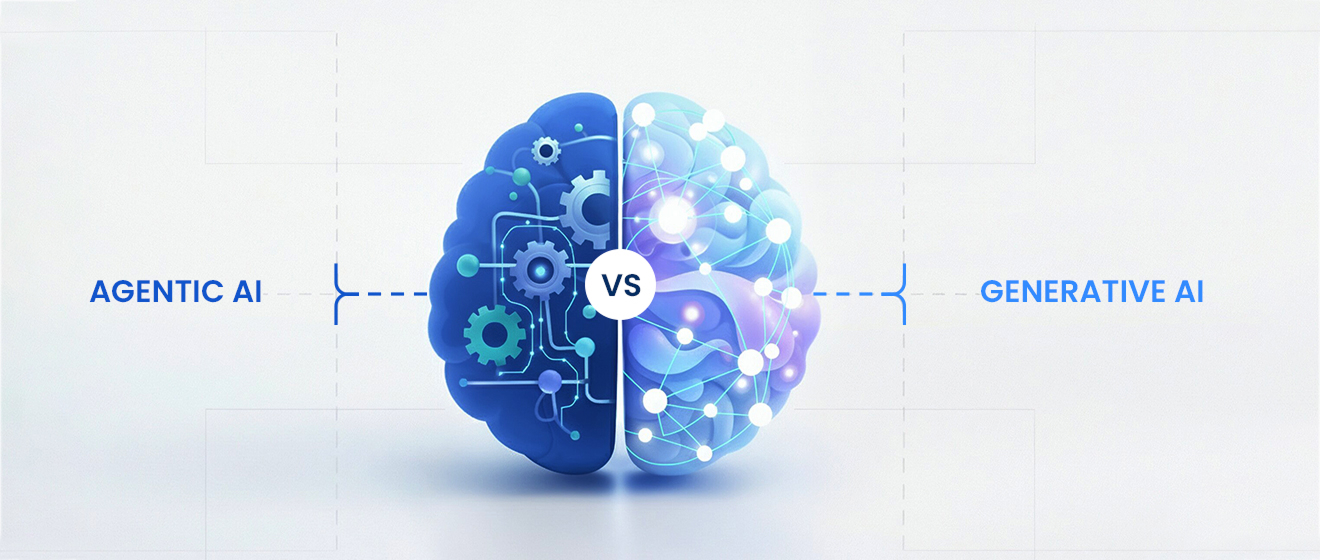
AI is not just changing business. It is redefining what work even looks like. As companies race to automate faster and think smarter, the conversation is shifting to agentic AI versus generative AI, a distinction that is easy to miss but critical to understand.
Generative AI focuses on producing content and outputs, while agentic AI is built to take initiative and execute multi-step actions. That difference is not academic. It shapes how far your automation can actually go, and understanding where each fits helps you build an AI strategy that delivers real impact.
This article breaks down how these two approaches differ, how they work together, and what each means for real-world business automation.
What is Generative and Agentic AI?
At a high level, generative AI and agentic AI solve very different problems. They are like yin and yang, or different sides of the same coin. Generative AI is designed to create. You give it a prompt, and it produces something new like text, images, summaries, or ideas. You can produce content, brainstorm, conduct research, and speed up documentation processes, but it is still reactive. It waits for instructions, responds, and stops there.
Agentic AI works differently. Instead of just generating outputs, it is built to take initiative within defined boundaries. It can plan steps, make decisions, trigger actions, and move a task forward with less human oversight. Think of it less as a tool you ask questions or give prompts to and more as a system that can execute a workflow. That is why the distinction matters so much when you start talking about real automation. The kind that runs processes, coordinates tasks, and reduces manual hand-holding depends on agent-like behavior, not just content generation.
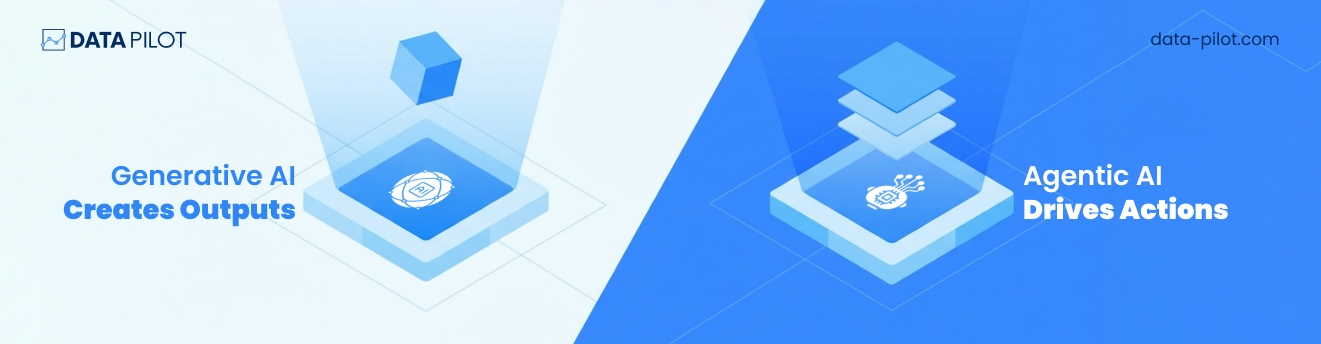
In practice, modern automation often blends both. Generative AI handles the creative or analytical pieces, while agentic AI manages sequencing, decision points, and follow-through. Understanding where one ends and the other begins helps you design smarter systems. Instead of expecting a content generator to run your operations or an autonomous agent to replace creative thinking, you can combine their strengths to build automation that is both capable and reliable.
Let’s break the generative AI versus agentic AI debate down further in plain language, look at real-world applications, and see how these technologies work together to power modern automation.
Understanding Generative AI: The Creator
Generative AI is what most people picture when they hear the word “AI.” It is built to create new content based on patterns learned from large amounts of data. You give it instructions, and it produces something useful, whether that is writing, code, summaries, or ideas. Tools like ChatGPT or Gemini work this way. They respond quickly and can feel almost like working with a very fast assistant.
The key thing to understand is that generative AI is reactive. It does not automatically decide what to work on. It waits for direction, then produces an output based on that request. You might ask it to write a follow-up email, summarize a report, or draft campaign captions. Within seconds, you have something you can refine and use. That speed is where much of its value comes from. Teams use it to remove friction from creative and documentation work, freeing people to focus on decisions, instead of repetitive tasks.
In day-to-day business use, generative AI often shows up in ways like:
1) Writing emails, articles, or marketing copy
2) Summarizing long documents or reports
3) Generating code snippets
4) Creating images or draft visuals
5) Producing chatbot-style responses
These capabilities make it a strong productivity booster. Instead of starting from a blank page, teams start with a draft. Brainstorming moves faster. Documentation becomes less painful. Content production can scale without burning people out. It is less about replacing human thinking and more about speeding up the first pass of work.
But this is where expectations sometimes drift away from reality. Generative AI does not manage workflows or oversee processes. It does not track goals, decide the next step in a sequence, or trigger actions on its own.
Once it delivers an output, its role is finished until you ask for something else. That limitation matters when businesses expect automation that runs continuously in the background.
Generative AI improves how work gets created, but it does not run the system that moves that work forward. Understanding that boundary helps teams use it where it shines, without assuming it can replace full operational oversight.
Also Read: AI Won’t Replace Leaders – But It Will Expose the Weak Ones
Understanding Agentic AI: The Actor
Agentic AI represents a newer step in how AI is being used. Instead of only generating content when asked, it is designed to work toward a goal. You can think of it less like an assistant waiting for instructions and more like a digital operator that keeps a process moving. Rather than reacting to prompts, it acts within defined rules to complete tasks that require planning and follow-through.
Imagine telling a system to maintain healthy inventory levels. An agentic setup would not just produce a report. It would watch stock numbers, notice patterns, predict shortages, and trigger the right actions to keep things balanced. The key difference is continuity. The system is not waiting for someone to ask what to do next. It is working through a sequence with the objective in mind, adjusting as conditions change.
Agentic AI is built to handle responsibilities like:
1) Running workflows across systems
2) Coordinating multi-step tasks
3) Monitoring changing environments
4) Making decisions based on conditions
5) Triggering automated actions
6) Learning from results over time
This is where AI shifts from helping people create outputs to helping manage the flow of work itself. Instead of stopping after one task is complete, the system keeps moving toward the goal. That is what makes it valuable for real automation. It reduces the need for constant human supervision and allows processes to operate more smoothly in the background.
In simple terms, generative AI focuses on producing work when asked, while agentic AI focuses on organizing and executing that work over time. Understanding that difference helps businesses design automation that is realistic. Creation is important, but orchestration is what allows systems to run consistently without someone guiding every step.
The Core Difference: Creation vs Execution
The easiest way to understand the distinction is through this table:
| Generative AI | Agentic AI |
| Creates outputs | Executes workflows |
| Prompt-driven | Goal-driven |
| Reactive | Autonomous |
| Content-focused | Process-focused |
| Assists work | Runs systems |
Why Automation Requires More Than Content Generation
Many businesses assume that if AI can generate content, they have automated their work. Writing emails, summarizing reports, or producing social posts is useful, but it only covers part of the process. True automation goes further. It moves work through a process, makes decisions when things change, and keeps operations running without someone manually managing every step.
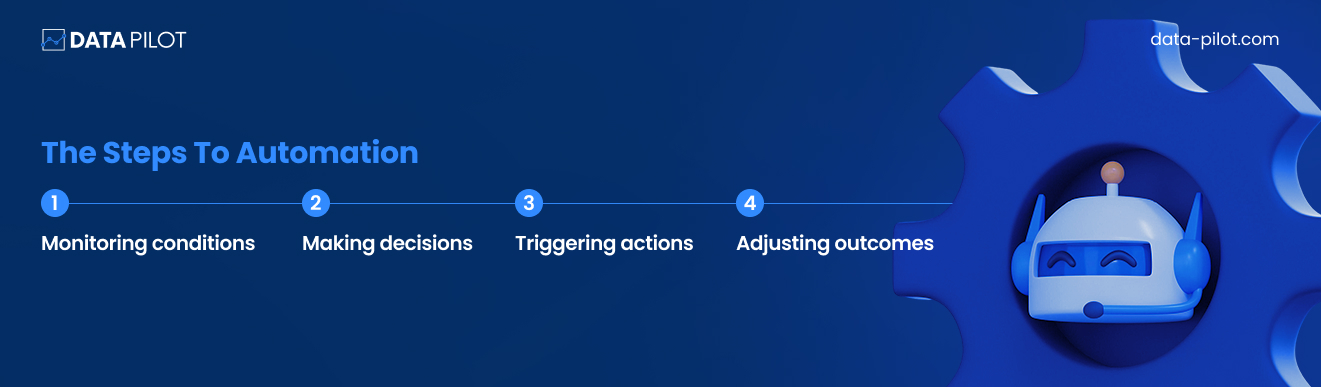
Real automation happens in four stages:
1) Monitoring conditions: Observing the environment for updates or changes
2) Making decisions: Choosing the next action based on rules or data
3) Triggering actions: Executing tasks automatically without human prompting
4) Adjusting outcomes: Learning from results and refining future actions
Generative AI mainly handles content creation, but it does not manage these stages. Without them, processes still require human oversight at every step. When AI is part of a system that can monitor, decide, act, and adjust, it becomes true automation. That is how businesses can save time, reduce mistakes, and let their teams focus on higher-level strategy instead of repetitive tasks.
Generative AI mainly handles content creation, but it does not manage these stages. Without them, processes still require human oversight at every step. When AI is part of a system that can monitor, decide, act, and adjust, it becomes true automation. That is how businesses can save time, reduce mistakes, and let their teams focus on higher-level strategy instead of repetitive tasks.
How Generative and Agentic AI Work Together
The most effective AI systems do not treat generative AI and agentic AI as separate or competing tools. Instead, they work together to handle tasks from start to finish. Take a customer support workflow as an example. An agentic AI system can monitor incoming tickets, determine how urgent they are, and route them to the right channels. Once the ticket is in the right place, generative AI steps in to draft personalized responses, summarize the issue, or even create knowledge-base articles.
Agentic AI has emerged as a game-changer for customer service, paving the way for autonomous and low-effort customer experiences.” says Daniel O’Sullivan, Senior Director Analyst, Gartner.
This combination shows the power of generative AI versus agentic AI in action. According to data from 2026, AI now handles about 95 percent of customer support interactions in the telecom sector with banking at 92 percent, including chat, voice, and email channels worldwide, showing how much these technologies are shaping real work processes.
One focuses on creating outputs, while the other manages the process and decision-making. When they are combined, teams get faster service, lower manual workload, and a much better customer experience. This hybrid approach is quickly becoming the backbone of intelligent automation, where AI not only produces work but also ensures it flows smoothly through every step.
Real-World Automation Examples
Let’s look at how these technologies show up in practice.
Customer Support Automation

Customer support is one of the clearest examples of how AI can transform business operations. Instead of relying on humans to read every message, prioritize requests, and respond individually, AI systems can manage most of the workflow.
In a modern setup, agentic AI monitors incoming support tickets, categorizes them by urgency, and routes them to the right department. It can even escalate critical issues automatically. Once tickets are assigned, generative AI steps in to create personalized responses, summarize customer concerns, or generate knowledge-base articles that help both customers and staff. The result is a faster response time, fewer human errors, and a significant reduction in repetitive tasks.
Marketing Automation
Marketing is another area where AI is making a big difference. Teams often spend hours creating campaigns, drafting social posts, writing emails, and analyzing performance. Hybrid AI can take over many of these repetitive steps while keeping campaigns aligned and targeted.
In this setup, agentic AI manages the workflow. It can schedule campaigns, segment audiences based on behavior, monitor engagement, and decide which content should be sent to which group. Generative AI creates the actual content writing emails, generating social media posts, crafting ad copy, or producing blog summaries. The combination means campaigns can run faster, more consistently, and with less human oversight. Teams can experiment with multiple versions of messaging at once, track which ones perform best, and let AI adjust campaigns dynamically.
Operations Management
Operations management involves coordinating many moving parts, from supply chains to inventory, scheduling, and logistics. These processes are often repetitive but critical, and mistakes can be costly. Hybrid AI can help by automating decisions and actions while keeping everything running smoothly.
In a modern setup, agentic AI monitors inventory levels, production schedules, and shipment timelines. It can detect shortages, predict delays, and decide when to reorder materials or adjust schedules. Meanwhile, generative AI produces reports, drafts updates for teams, or summarizes trends and performance metrics. The result is a system that can respond to changes automatically, reduce human error, and keep operations running efficiently without constant oversight.
Sales Enablement
Sales teams spend a lot of time preparing materials, tracking leads, and figuring out the next steps with prospects. Hybrid AI can take over much of the routine work while making sure the right content reaches the right person at the right time.
In this setup, agentic AI monitors the sales pipeline, identifies which leads are most likely to convert, and suggests the next action for each deal. Generative AI creates personalized emails, drafts proposals, summarizes client interactions, or even generates talking points for meetings. The result is faster follow-ups, higher-quality outreach, and a smoother experience for both the sales team and the customer.
Benefits of Agentic AI in Automation
Organizations that adopt agentic AI see real improvements in how work gets done. These systems do more than just generate outputs—they manage workflows, make decisions, and keep processes moving without constant human oversight. Key benefits include:
1) Reduced Manual Oversight: Processes can run on their own, freeing staff from repetitive monitoring.
2) Faster Decision Cycles: The AI reacts instantly to changes and new information.
3) Scalability: Systems can handle growth without needing the same increase in staff.
4) Consistency: Automation reduces errors that often happen with manual work.
5) Adaptability: Workflows can adjust automatically based on outcomes and results.
Generative AI helps teams produce work faster, while agentic AI transforms how operations run. Together, they create systems that are both productive and reliable.
Where Generative AI Still Shines
Even with powerful agentic AI, generative AI remains a critical part of automation. Many tasks still require creative, human-facing content, and generative AI handles that exceptionally well. It excels in areas like:
1) Creative Production: Writing, designing, or drafting ideas quickly.
2) Knowledge Summarization: Condensing complex information into usable insights.
3) Documentation: Preparing guides, reports, or records efficiently.
4) Personalization: Tailoring content or messaging to individual users.
5) Rapid Iteration: Testing multiple versions quickly to see what works best.
Think of generative AI as the creative engine inside larger automated systems. It creates the outputs that agentic AI can then distribute, act on, and manage.
Preparing for Agentic AI
Before adopting agentic AI, businesses should evaluate a few key areas to make sure automation works smoothly:
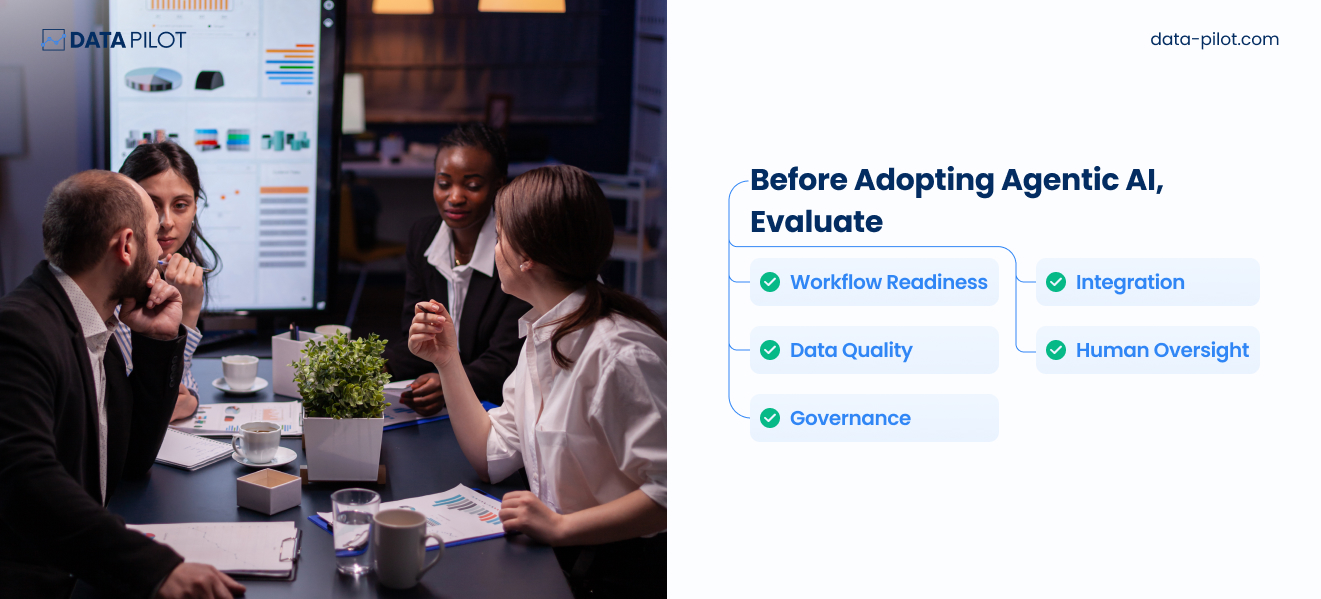
1) Workflow Readiness: Are your processes clearly defined and repeatable?
2) Data Quality: Automation depends on accurate and up-to-date information.
3) Governance: Who is responsible for overseeing AI decisions?
4) Integration: Can AI systems communicate effectively with your existing tools?
5) Human Oversight: Where should humans remain involved to guide or check the system?
Automation is not about replacing people. It is about enabling smarter collaboration between humans and AI to get work done faster, more accurately, and more efficiently.
The Future of AI-Driven Automation
AI is moving fast. We are seeing systems that can optimize themselves, predict outcomes, make decisions alongside humans, and learn continuously from results. We’re shifting from tools that simply assist humans to systems that truly partner with them. This is where understanding generative AI versus agentic AI becomes critical. Generative AI creates content and outputs, while agentic AI manages workflows, makes decisions, and ensures actions are carried out efficiently. The two work best when combined, powering automation that is both creative and operational.
Moving From AI Tools to Real Automation Strategy
Most businesses don’t struggle to understand what AI can generate. They struggle to understand how AI should fit into their operations. Writing content faster is useful, but it doesn’t automatically create smarter systems. Real automation happens when AI is connected to decision-making, workflows, and outcomes, not just output.
This is where thinking beyond surface-level AI adoption becomes important.
Generative AI is often the entry point. Teams use it to draft emails, summarize reports, brainstorm ideas, or create documentation. These are valuable wins because they reduce time spent on repetitive tasks. Productivity increases almost immediately. But after the initial excitement, leaders usually notice something: workflows still require manual coordination. People still decide what happens next, track progress, and intervene when things stall.
That gap reveals the limits of output-focused automation.
Agentic AI addresses that missing layer. Instead of waiting for prompts, it operates around goals and conditions. It monitors environments, evaluates triggers, and executes predefined actions. This allows automation to extend beyond creation into orchestration. Work no longer depends on constant human direction to keep moving.
For business leaders, the practical question is not which AI is “better.” It’s how to match each capability to the right part of the workflow.
A useful way to think about it is in stages of work:
1) Creation: drafting, summarizing, generating content
2) Coordination: sequencing tasks and routing decisions
3) Execution: triggering actions and maintaining flow
4) Optimization: learning from outcomes and adjusting
Generative AI excels in the creation stage. Agentic AI becomes essential in coordination and execution. When businesses only automate creation, they speed up individual tasks. When they automate coordination and execution, they change how work happens at a system level.
That distinction has measurable impact. Teams relying solely on generative tools often experience faster output but unchanged operational bottlenecks. In contrast, organizations layering agentic systems onto workflows reduce delays, missed handoffs, and manual oversight. Automation shifts from being task-level assistance to process-level intelligence.
Another practical benefit is decision consistency. Humans naturally vary in judgment under pressure, fatigue, or incomplete information. Agentic AI follows defined logic and real-time signals, allowing workflows to respond predictably. This doesn’t remove human authority. It creates a stable operational backbone where people focus on strategy rather than constant intervention.
For companies planning their automation roadmap, a simple mindset shift helps: stop asking, “What can AI create?” and start asking, “What decisions or workflows should run automatically?”
That question leads to smarter implementation. Generative AI becomes the engine that produces communication and documentation. Agentic AI becomes the conductor that keeps everything aligned. Together, they reduce friction, increase speed, and free teams to work at a higher level.
The businesses seeing the strongest results aren’t chasing flashy demos. They are redesigning workflows so creation, decision-making, and execution work as a connected system. That’s the real evolution of AI-driven automation. It’s not about replacing effort with content generation. It’s about building systems that actively move work forward.
When leaders understand this difference, AI adoption stops being experimental and starts becoming operational. And that’s where automation delivers its true value
Final Takeaway
If you take away one idea, let it be this: automation is more than content generation. Real automation requires systems that can monitor conditions, make decisions, trigger actions, and adjust outcomes. Agentic AI handles the orchestration, while generative AI fuels productivity. Organizations that understand this distinction can design smarter workflows, adopt the right tools, and build automation strategies that scale. The future is not about choosing one type of AI over the other. It is about combining creation and execution to deliver true operational intelligence.