
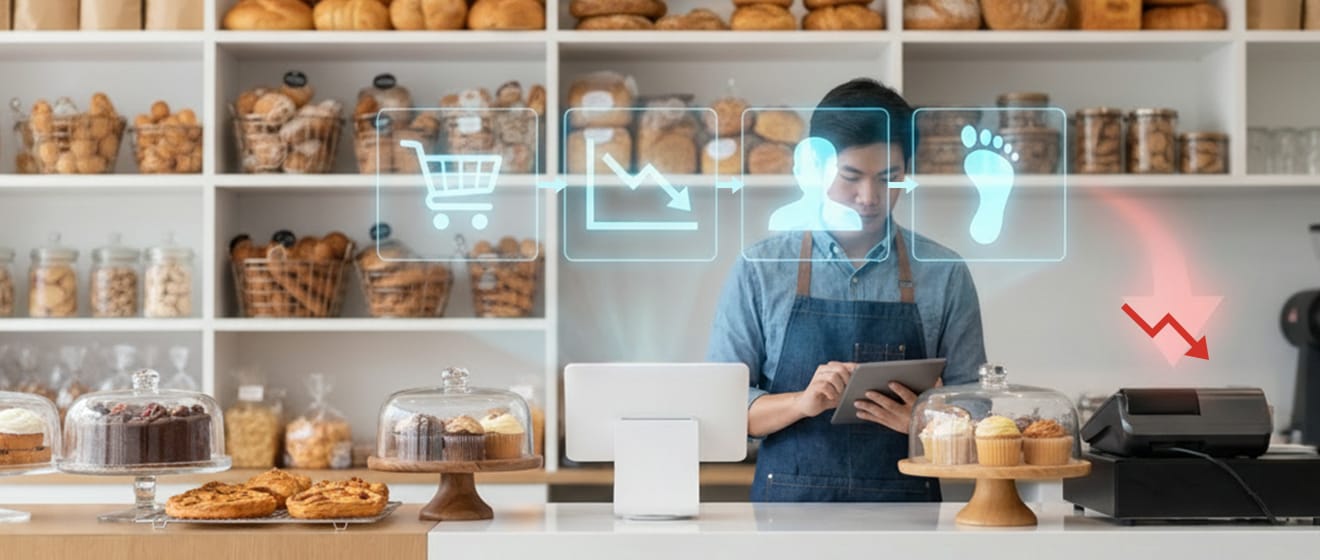
A data-backed reality check for bakeries, cafés, and restaurants.
Walk into any bakery early in the morning. That warm butter-in-the-air hush before the doors open, and you’ll see hundreds of tiny decisions in motion. How much dough did we prep? Should we bake more Danish today? Do Fridays feel busier than Thursdays now? Did we order enough milk for cappuccinos? Is the brioche still moving, or should we cut the batch size today?
Thousands of food businesses across the world operate like this. Decisions made in hurried moments, stitched together with experience, gut feel, and rough estimates. And most days, it works well enough to get through service.
But “well enough” is getting expensive.
The truth is: your food doesn’t expire first, your decisions do. And the older the decision-making method, the more it quietly drains your margins. This is not a technology pitch or an AI fairy tale. It’s a reality confronting the entire food industry: businesses that run on instinct are losing money to those that run on information.
Let’s unpack why.
The Invisible Price Tag of Guesswork
The food business has one of the thinnest margins in the world. Yet, ironically, it’s also one of the most unpredictable. A beautiful sunny day can triple footfall. A rainy Tuesday can flatten sales. School holidays, salary weeks, cricket matches, religious events, local festivals, construction detours, every little thing affects demand in ways you can’t see without proper tracking.
Yet most bakeries, restaurants, and cafés still rely on what feels right or what happened last week to plan. And research consistently shows how dangerous that approach is:
- Restaurants waste from 4-10% of their purchased food, mostly due to overproduction and inaccurate inventory decisions.
- The global food service industry dumps $162 billion worth of food annually, much of it driven by misjudged demand.
- Three out of four food businesses still use manual systems: spreadsheets, whiteboards, or “mental math” — to manage inventory.
- Businesses using analytics and forecasting see waste reduction of 30–50% and purchasing cost reductions of 10–15% on average.
And here’s the painful irony: most business owners don’t even realize how much they’re losing because waste blends into the daily routine. A few leftover croissants here, a tray of buns there, some expired greens at the back of the fridge; it all feels small.
But over a year, that “small waste” becomes a massive leak.
What’s leaking is decision quality.
And without the right data, decisions age fast.
Why Data Has Become the Freshest Ingredient in Foodservice
Let’s be honest: the word “data” has gotten a bit of a reputation. Some think it’s too technical. Others imagine complex dashboards. Some assume it’s only for big chains. But data, at its core, is simply the story your business has already lived made visible, measurable, and useful.
Remember the morning rush pattern you think happens? Data shows you exactly when and how sharply it comes.
Remember the item you feel isn’t selling? Data tells you whether that’s true, at what time, on which days, and why.
Remember thinking you needed to prep more sandwiches because last Friday was busy? Data shows whether something caused that spike – weather, an event, payday- or if it was just a one-off.
This is the difference between guessing based on fragments and knowing based on patterns.
And here’s where modern analytics and AI take it a step further:
They don’t just tell you what happened.
They tell you what’s likely to happen.
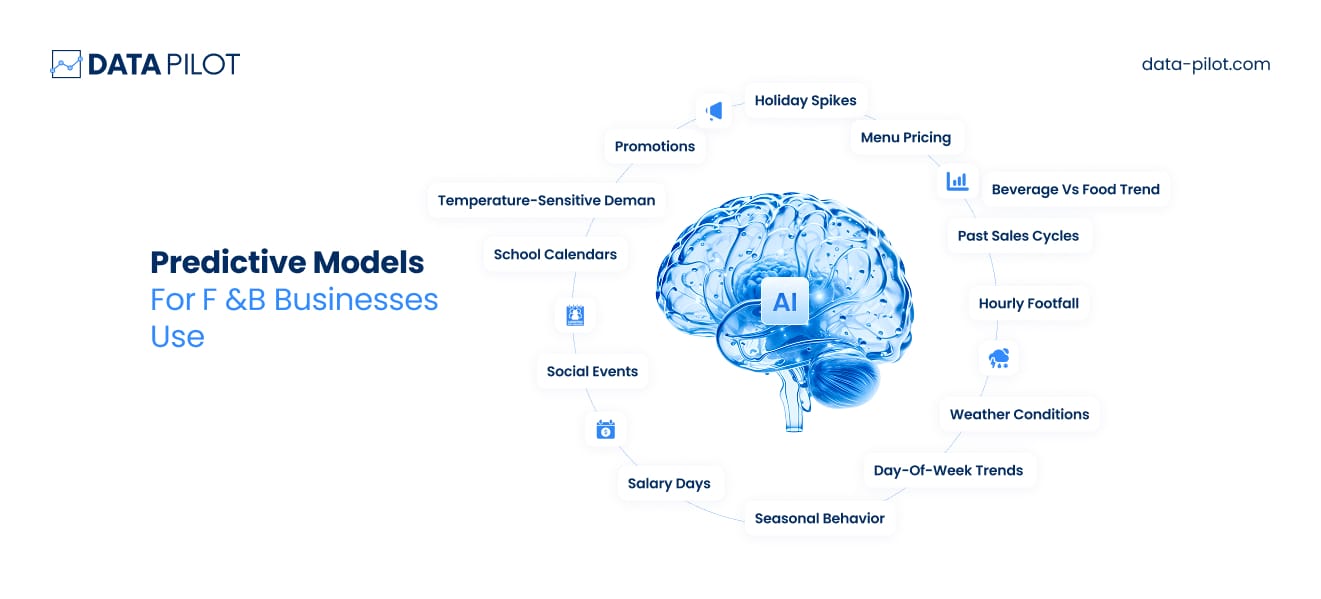
Predictive models today use:
- Past sales cycles
- Hourly footfall
- Weather conditions
- Day-of-week trends
- Seasonal behavior
- Salary days
- Social events
- School calendars
- Holiday spikes
- Temperature-sensitive demand
- Menu pricing
- Promotions
- Beverage vs food trends
That is far more than a human brain can track in real time. Which is exactly why businesses that embrace data see immediate financial improvement. They’re not smarter. They’re not luckier. They’re simply better informed.
Data Brings Control to the Most Chaotic Parts of Your Business
Inventory management in foodservice is the engine that determines profit or loss. And it’s chaotic because so many factors influence it daily. Data brings order to that chaos.
A Smarter Way to Plan Production
Production planning is where most food waste happens. A bakery preps two large batches instead of one. A café overestimates pastry sales. A restaurant cooks too much rice for the night. These decisions come from a place of “better safe than sorry,” which is understandable, but expensive.
Data-driven forecasting shifts your operation from fear-based prepping to confidence-based prepping.
For example:
- Predictive analytics can tell a bakery that pastry demand on rainy weekdays usually drops by 18–22%.
- A café may learn that smoothie sales spike only between 4–7 PM on hot days above 32°C
- A restaurant might discover that pasta sales increase 25% on the 1st and 2nd of every month (salary effect).
Once you know this, your prep decisions stop being hunches and start being strategic.
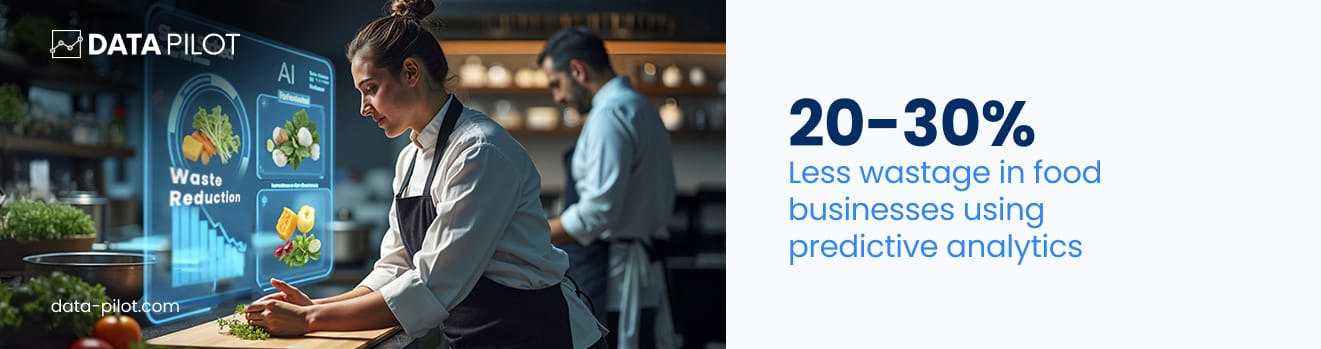
Businesses using this approach often reduce overproduction by 20–30% within weeks.
Inventory Visibility That Stops Costly Surprises
Think of the last time you discovered something expired at the back of your fridge, the sinking feeling, the frustration, the waste. Now imagine never being surprised again.
Data systems today track:
- Real-time ingredient levels
- Ingredient expiry windows
- Supplier delivery delays
- Usage rate per dish
- Cost contribution per menu item
- Inventory aging patterns
It’s like having an employee whose only job is to monitor your stock 24/7 and warn you before anything becomes a problem.
Supplier Ordering That Finally Makes Sense
Ordering is another area where businesses routinely lose money. When you don’t know upcoming demand clearly, you can only order too much or too little, both of which cost money differently. Data solves this by calculating precisely what you’ll need based on upcoming demand predictions. Restaurants using AI-driven ordering often reduce their purchasing budgets by 10–15%, simply because they stop buying “just in case” stock that ends up spoiling.
Is your business
AI-prepared?
Waste Analysis That Actually Leads to Improvements
Waste tells you:
- Which items need batch adjustments
- Whether pricing is right
- Whether marketing needs support
- Whether certain products perform differently on certain days
- Whether menu items need redesign
- Whether prep timing is mismatched with demand
- Whether staff training is needed
Once you start treating waste as feedback instead of failure, margins improve dramatically.
What a Data-Driven Operation Feels Like
Let’s talk feelings for a moment, not numbers. A data-driven operation feels different. It’s calmer. More predictable. Less frantic. Staff know what to expect. Prep feels purposeful. Ordering feels controlled. Owners feel like they’re ahead of the day, not chasing behind it.

Picture this:
A Peak Saturday: Managed with Precision
There’s a festival two blocks away, historically these events boost your footfall by 30–40%. Weather forecasts predict warm temperatures. Data models tell you to expect an increase in sandwich demand, more iced beverages, and a mid-morning pastry surge.
You prep accordingly: not too much, not too little.
You sell out of bestsellers without waste.
You serve faster.
You retain customers.
You increase revenue.
You stay in control.
A Slow Monday: Without the Pain
Rain is predicted. Past patterns show traffic drops sharply by 20–30%. Data signals you to reduce pastry prep, hold back on certain dough, adjust staffing for non-peak hours, and delay cooking certain items until a modest afternoon bump.
Instead of waste and labor overload, your day runs smoothly.
No guilt.
No chaos.
No unnecessary cost.
This is what it means when decisions stop expiring.
Why All of This Matters More Now Than Ever
The food industry is changing rapidly:
- Ingredient costs are rising globally.
- Customer expectations for freshness are higher than ever.
- Social media boosts demand unpredictably.
- Weather patterns are more volatile.
- Delivery platforms shift sales patterns daily.
- Footfall is less predictable due to hybrid work lifestyles.
- Competitor activity affects local traffic.
The “predict by instinct” era is fading.
The “predict with data” era is already here.
Data is now the baseline needed to survive.
Your food doesn’t expire because you chose the wrong items.
It expires because your decisions didn’t evolve.
Upgrade your decisions, and everything else upgrades automatically.